When bringing personal items to Turkey, knowing the country’s customs regulations is essential to avoid delays or unexpected fees. Like many countries, Turkey has specific rules about what you can bring, how much, and when certain items require declaration. Whether traveling with personal electronics, valuable jewelry, or even medication, understanding customs policies can make your arrival smoother and stress-free.

This guide will walk you through Turkey’s customs process, covering duty-free allowances, restricted items, and key tips to speed up your entry. With the right preparation, you’ll be ready to navigate Turkish customs confidently, ensuring a hassle-free start to your journey. 

Overview of Turkish Customs Regulations

A basic understanding of Turkish customs regulations is key to a smooth arrival when bringing personal items to Turkey. Turkish customs generally allow duty-free entry for personal effects, including clothing, electronics, and toiletries, provided they are for personal use and not for resale.

Restricted items, including large alcohol or tobacco, may require special approval. Travelers should also be aware of limits on currency import and export. You must declare amounts over a certain threshold. As you probably know, travel is good for your well-being, but knowing what to expect at customs will help you avoid stress and focus on enjoying Turkey’s rich culture and scenic beauty.

Duty-Free Allowances for Personal Items

Packing for traveling abroad can feel overwhelming, but careful planning ensures you have all the items you should bring to make your stay comfortable and stress-free, especially if you plan on living abroad. Among the essentials to pack, you’ll need financial items, electronics with appropriate adapters, and clothing or personal necessities tailored to your destination.

If you’re going to Turkey, whether for a week or a year, understanding the country’s duty-free allowances can help streamline your packing. Turkey allows a variety of personal items without incurring duties, including clothing, small electronics, and certain toiletries, as long as they are for personal use. However, remember that electronics are typically restricted to one unit per type—such as one laptop or camera—per traveler. Exceeding these limits or carrying multiple high-value items may require a declaration and could lead to additional fees.

By familiarizing yourself with these guidelines, you can avoid unnecessary expenses and focus on settling into your new surroundings with everything you need.

Declaring High-Value Items at Turkish Customs

When bringing high-value items into Turkey, such as expensive jewelry, professional cameras, or specialized equipment, it’s important to declare them at customs. Declaring these items upfront helps prevent potential fines or confiscation upon arrival or departure. Items valued above Turkey’s customs allowance may require additional paperwork and could incur import duties if they aren’t registered for temporary import.

If these valuables are only for personal use during a short visit, consider documenting them with a detailed inventory or purchase receipts to show ownership. For longer stays, you might have to complete additional forms and obtain permission to import temporarily. 

Restricted and Prohibited Items to Avoid Bringing

When bringing personal items to Turkey, it’s essential to know which items are restricted or prohibited to avoid complications at customs. Restricted items include certain electronics, large cash, and specific medications. All of these may require prior approval or documentation.

Items like firearms, illicit substances, and materials considered politically sensitive are strictly prohibited and could lead to serious penalties if brought into the country. Additionally, Turkey has strict rules on food items, particularly raw meats and unprocessed dairy, which are not allowed for import. Before you travel, reviewing the Turkish customs website for the latest guidelines is a good idea, ensuring you leave restricted or prohibited items at home.

Process for Bringing Electronics and Technology

Understanding customs regulations when bringing electronics and technology into Turkey will help prevent unexpected issues. Travelers can bring personal-use electronics, like smartphones, laptops, and cameras, without paying duties if they meet quantity limits—typically one of each item per person.

For those staying longer or planning to register devices in Turkey, note that some electronics may need to be officially registered with Turkish authorities, especially if you plan to use local SIM cards in your devices. Also, Turkey’s customs are strict about items that appear for resale. So, avoid bringing multiple devices of the same kind. To capture the beautiful things to see in Turkey, having your devices properly declared and registered ensures they’re ready to use without interruption.
Handling Personal Medications and Health Supplies

Bringing personal medications and health supplies into Turkey requires careful planning to ensure a smooth process at customs. Turkey allows travelers to bring personal-use medications, but a doctor’s note or prescription should accompany prescription drugs, ideally translated into Turkish or English. This documentation helps customs officials confirm the medication’s necessity and avoid potential confiscation.

A doctor’s note explaining the use of medical devices such as CPAP machines or insulin pumps is wise. Over-the-counter medications are generally allowed in reasonable quantities, but check Turkish customs regulations if you plan to bring larger amounts. 

Special Rules for Bringing Pets to Turkey

Turkey requires pets to have up-to-date vaccinations, particularly for rabies, administered at least 30 days before travel. You’ll also need a veterinary health certificate. These are typically issued within ten days of arrival and certify your pet’s health and vaccination status.

Some pets may require an additional microchip for identification, which must meet ISO standards for compatibility with Turkish systems. Certain breeds may face further restrictions or, in rare cases, may not be permitted entry. So, prepare all necessary documents to ensure your pet’s safe and hassle-free journey alongside you.

ips to Speed Up the Customs Process

Follow these practical tips to make your experience at Turkish customs faster and stress-free. First, organize your documents in an easily accessible place, such as a travel folder, for quick presentation. Of course, pack efficiently by keeping items you may need to declare at the top of your luggage, making them easy to reach during the inspection.

Use the “Green” or “Red” channel correctly—Green if you have no items to declare and Red if you do. Consider arriving at non-peak times to avoid long lines, and if possible, use Turkey’s e-Declaration system for pre-arrival customs processing. These small steps can help you breeze through customs and start enjoying your time in Turkey.

Ready for a Smooth Entry into Turkey!

Preparing for customs and knowing what to expect when bringing personal items to Turkey will save time and avoid unnecessary stress. A little preparation goes a long way toward a seamless arrival, allowing you to focus on enjoying everything Turkey has to offer. Safe travels, and happy exploring!

Photos used:

https://www.pexels.com/photo/city-near-body-of-water-2048865
https://www.pexels.com/photo/flag-of-turkey-1435534
https://www.pexels.com/photo/man-petting-dog-in-mountains-16168090
https://www.pexels.com/photo/black-and-green-luggage-bag-on-brown-carpet-7368191

Welcome to a flavorful journey exploring the intricate relationship between Greek and Turkish cuisines. Nestled at the crossroads of Europe and Asia, Greece and Turkey share more than just geographical proximity. They boast a rich, intertwined culinary history shaped by centuries of cultural exchange. From the bustling markets of Istanbul to the sun-drenched islands of Greece, we’ll uncover the shared ingredients, cooking techniques, and dishes that define and distinguish these two cuisines.

Historical Ties and Culinary Exchanges

The historical ties between Greek and Turkish cuisines are as rich as they are complex, rooted deeply in the past. During the expansive era of the Ottoman Empire, culinary practices flowed seamlessly across what is now modern-day Greece and Turkey, facilitating a significant exchange of ingredients and cooking techniques. This period saw the birth of numerous dishes that are today staples in both cultures, albeit with distinct regional twists.

Trade and migration played crucial roles in this culinary intermingling. For instance, spices from the East found their way into Greek kitchens, while Turkish cuisine adopted Greek olives and cheese. These historical exchanges have left a lasting imprint, creating a shared culinary heritage that continues to evolve and inspire.

Greek Salad

Common Ingredients, Diverse Flavors

Though separated by a narrow sea, the kitchens of Greece and Turkey are united by a plethora of common ingredients, each manipulated to produce diverse and distinct flavors.

Olive oil, a liquid gold in both cuisines, is used in varying quantities and for different purposes – from Greek salads to Turkish stews. Similarly, lamb is central to both culinary traditions. It is often roasted in Greek dishes, while in Turkish cuisine, it’s more commonly ground for kebabs. Yogurt, another staple, varies from the thick, creamy Greek variety to the thinner, tangier Turkish version, each serving unique roles in their respective food cultures.

For every passionate foodie, exploring these ingredients in Greek and Turkish dishes reveals a fascinating juxtaposition of similarity in base yet diversity in expression. As a result, it offers a glimpse into the subtle artistry that defines these rich cuisines.

A Tale of Two Mezes: Similarities and Differences

Meze, the delightful array of appetizers that grace tables in Greece and Turkey, offers a fascinating study of culinary similarities and differences. In Greece, mezes often include olives, feta cheese, and tzatziki, served alongside fresh bread or pita. While echoing these elements, Turkish mezes might also feature more spiced and aromatic dishes like ezme and stuffed grape leaves.

Both cuisines use meze to complement main dishes, but there’s a subtle art in their presentation and consumption. Greek meze tends to lean towards fresh, lighter flavors, reflecting the Mediterranean ethos. On the other hand, Turkish meze often incorporates more complex spices, showcasing the influence of the broader Middle Eastern palate. Either way, meze is a perfect starter for exploring the rich culinary landscapes of Greece and Turkey.

Street Food: A Delicious Intersection

Street food is a vibrant and essential part of both Greek and Turkish cultures. It is where flavors mingle and culinary traditions meet. The gyro, a pita bread wrapped around grilled meat, often pork or chicken, topped with sauces and fresh vegetables, reigns supreme in Greece. This dish epitomizes a budget-friendly Greek adventure, offering a hearty and flavorful meal on the go.

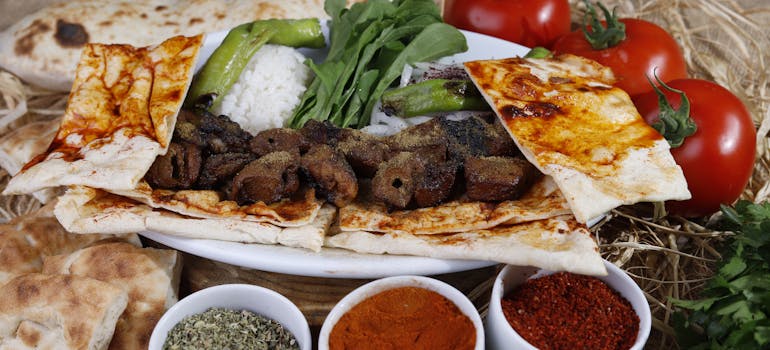
Across the Aegean, in Turkey, the kebab takes a similar form but with distinct variations – skewered and grilled lamb or beef, often served with rice or in a wrap. Both these street food staples reflect the everyday life and preferences of the locals, embodying the essence of quick, satisfying meals. While they differ in ingredients and preparation, gyros and kebabs symbolize the shared love for food that is both accessible and deeply rooted in the culinary history of Greece and Turkey.

Modern Fusion: Greek and Turkish Cuisines in Today’s World

In today’s globalized world, Greek and Turkish cuisines are experiencing an exciting phase of modern fusion as contemporary chefs blend traditional flavors with new influences. Restaurants across the globe now serve dishes that marry Greek freshness with Turkish richness, transcending geographical boundaries.

This culinary fusion is further enhanced by international moves and the melting pot of globalization. For instance, someone moving from Virginia to Greece might bring with them a palate accustomed to American flavors, potentially infusing Greek and Turkish dishes with a unique twist. This could mean experimenting with bolder spices in a traditional moussaka or introducing a smoky flavor to kebabs.

Of course, if you’re planning to make Greece your home and move all the way from Virginia, make sure to reach out to international movers. But it’s not just your belongings that make the journey. You also bring the potential to contribute to and enrich the culinary landscape of your new home. By weaving in your own experiences and tastes, you become a culinary adventurer, adding your unique flavor to the rich tapestry of Greek and Turkish cuisines.

Sweet Endings: Shared Dessert Traditions

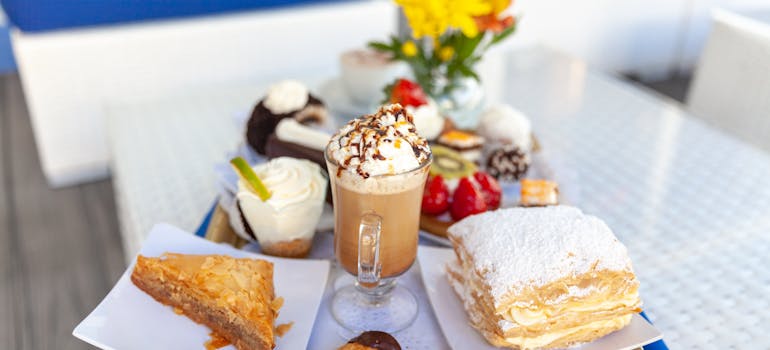
If you think there’s something we haven’t mentioned yet, you’re right. We’ve left the best (and sweetest) for last! Greek and Turkish cuisines converge in a sweet symphony of shared traditions, each with its unique twist. Take baklava, for instance: this flaky, nut-filled pastry, drenched in syrup, is a staple in both cultures. However, the Greek version often uses honey and walnuts, while the Turkish variety might feature pistachios and a lighter syrup.

This divergence extends to other desserts as well. Greek cuisine boasts desserts like galaktoboureko, a creamy, custard-filled phyllo pie. In contrast, Turkish delights like künefe, a cheese-based dessert with shredded kadayif, offer a different but equally compelling experience. Spices like cinnamon and clove also vary, adding distinct aromatic touches. So, whether traveling solo or with friends, don’t miss out on indulging in these delightful desserts. That way, you’ll get a true taste of Greek and Turkish culinary heritage.

Savor the Shared Flavors!

The deep connection between Greek and Turkish cuisines showcases a remarkable culinary interplay. Understanding and appreciating the cultural context behind these dishes enhances our dining experience. As we explore and enjoy the rich flavors of Greek and Turkish dishes, we are reminded of the power of food to transcend boundaries. It brings together different cultures and histories in a harmonious blend of taste and tradition.

Photos used:

https://www.pexels.com/photo/clear-blue-sea-164041
https://www.pexels.com/photo/sweet-desserts-1473060
https://www.pexels.com/photo/close-up-of-greek-dolmades-dish-7167830
https://www.pexels.com/photo/view-of-a-kebab-dish-on-a-plate-with-raw-ingredients-and-spices-lying-around-15390671

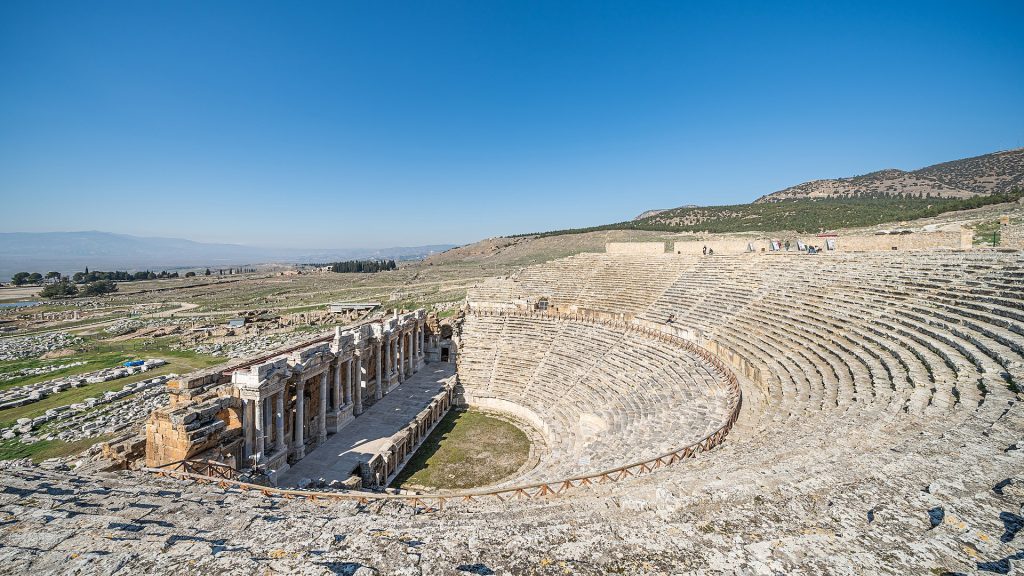
Hierapolis Turkey the Theater

Stepping foot into Turkey for the first time, you quickly realize it’s more than just a country; it’s a vibrant tapestry woven with the threads of ancient civilizations. Situated at the crossroads of Europe and Asia, Turkey holds a unique place in history. Delving into its past becomes an adventure when you explore the best archaeological sites to visit in Turkey. This blog post is your time-travel ticket, guiding you through majestic ruins and offering valuable tips to enhance your journey. Get ready to immerse yourself in the tales of bygone eras, bringing history to life one archaeological site at a time.

Ephesus: The Ancient Greek City

Ephesus_Turkey_Celsus_Library

Once a flourishing ancient Greek city, Ephesus beckons with its monumental relics. Founded in the 10th century BC, Ephesus is now a UNESCO World Heritage Site with striking ruins reflecting its glorious past. A tour through this ancient city introduces you to spectacular structures such as the Library of Celsus and the grand Temple of Artemis, one of the Seven Wonders of the Ancient World.

The journey through Ephesus is like stepping into a time machine. As you wander its marble streets, you can almost hear the echoes of ancient philosophers debating or the crowd’s cheers in the Great Theatre. This historical site, one of the best archaeological sites to visit in Turkey, is a testament to the grandeur of ancient Greek civilization. It offers an experience like no other, sparking the imagination with tales of the past.

Are you planning your visit to Ephesus? Autumn and spring seasons offer pleasant weather, perfect for exploring this open-air museum. Don’t forget to bring a hat and comfortable shoes, as you’ll walk a lot through the city’s historical paths.

Göbekli Tepe: The World’s Oldest Temple

Göbekli Tepe Anatolia Turkey

Another must-see on your Turkish itinerary is Göbekli Tepe, widely recognized as the world’s oldest temple. This archaeological marvel dates back to around 9600 to 7300 BC, predating Stonehenge by thousands of years. With its massive, intricate stone circles, Göbekli Tepe stands as a testament to the ingenuity of our early ancestors.

As one of Turkey’s best places to visit, the site reveals an architectural style that stirs awe and mystery. The T-shaped stone pillars, some adorned with carvings of animals and abstract symbols, offer a fascinating glimpse into the prehistoric world.

When planning a trip to Göbekli Tepe, consider visiting in spring or autumn to avoid the scorching summer heat. Also, remember that the site is on a hill, so wear sturdy shoes for your trek up.

There’s something undeniably enchanting about Göbekli Tepe. A captivating story told through stone is the tale of its discovery. Found by a local farmer and later excavated by archaeologists, the site was initially mistaken for a medieval cemetery. Today it holds its rightful place as a pioneering landmark in human history, making it a must-see.

Troy: The Legendary City of Homer’s Iliad

Troy_Turkey_Amphitheatre

Who hasn’t heard of the legendary city of Troy? Famous for its central role in Homer’s epic, “Iliad,” Troy has enthralled history buffs and literature lovers alike for centuries. Nestled in Northwestern Turkey, it’s an intriguing blend of myth and reality, with layers of history dating back to 3000 BC.

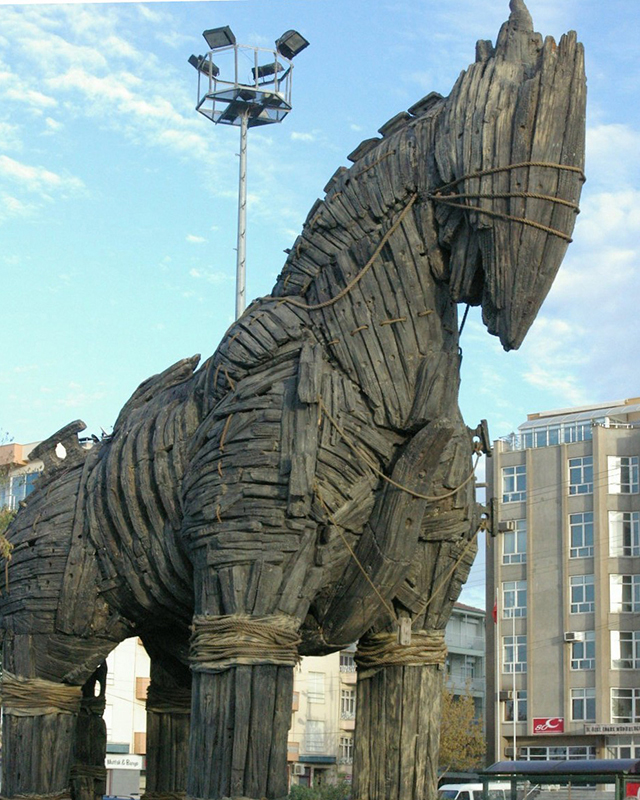
The city invites exploration with its iconic ruins, such as the reconstructed walls of Troy and the replica of the legendary wooden horse. As you traverse the ancient city, you’ll feel like you’re walking through the chapters of the “Iliad,” imagining the legendary Trojan War and the tale of the Trojan Horse.

When visiting Troy, experts from royalmovingco.com suggest bringing lightweight, foldable bags for any artifacts or souvenirs you might buy. That will help with easy storage and moving around as you navigate the expansive site. The best time to visit Troy is in the spring or autumn when the weather is mild and the site less crowded.

Immersing yourself in the legendary city of Troy is like leafing through the pages of a living history book. Each ancient ruin echoes stories of heroism, love, and conflict, offering a truly immersive experience that marks Troy as a highlight in your journey through the best archaeological sites to visit in Turkey.

Hierapolis-Pamukkale: The Cotton Castle

Hierapolis Turkey Frontinus Gate

Last but certainly not least on our list is the breathtaking Hierapolis-Pamukkale, aptly dubbed the ‘Cotton Castle.’ This unique site is a natural wonder paired with a rich historical landscape. The gleaming white travertine terraces of Pamukkale, formed by mineral-rich thermal waters, seem to glow against the blue sky, creating a scene of ethereal beauty.

This UNESCO World Heritage Site houses the ancient city of Hierapolis. Explore the ruins of Roman baths, temples, and the well-preserved ancient theatre. Don’t miss the chance to dip in the thermal waters, which are believed to have healing properties since ancient times.

The best time to visit Hierapolis-Pamukkale is in the cooler months of spring and autumn. Pack a swimsuit for the thermal pools, and remember to respect the site’s rules to help preserve its natural beauty.

Its enchanting blend of natural beauty and historical depth sets Hierapolis-Pamukkale apart. Visiting this site, you’ll find yourself captivated by the stark white terraces that form a stark contrast to the surrounding landscape. The well-preserved ruins of Hierapolis invite exploration and offer a glimpse into the grandeur of the past. This unique combination of nature and history makes Hierapolis-Pamukkale one of the archaeological sites to visit in Turkey.

Final words

As we conclude our archaeological journey through Turkey, it’s clear that the country’s rich history and diverse cultures offer an unforgettable experience. From the ancient city of Ephesus to the world’s oldest temple at Göbekli Tepe, we’ve explored some of the best archaeological sites to visit in Turkey. These sites serve as gateways to the past and reflections of the timelessness of human ingenuity and spirit.

While exploring these remarkable sites, don’t forget to immerse yourself in the local culture. Take a break and rejuvenate at the traditional Turkish baths and hammams of Istanbul, a perfect complement to your archaeological adventure.

Travel isn’t merely about seeing new places. It’s about experiencing history, understanding cultures, and broadening perspectives. By visiting these historical sites, you become a part of Turkey’s rich tapestry. You connect with the past while making unforgettable memories in the present. So, pack your bags, and let the mesmerizing land of Turkey take you on a journey through time.

Istanbul is a city of many wonders. From the grandeur of Sultanahmet to the bustling markets of Beyoglu and the ancient architecture scattered across the city, there’s always something new to see here. One thing that seems to get overlooked by tourists is the Turkish baths and hammams of Istanbul – and for a good reason. They’re often misunderstood by travellers who aren’t familiar with what they offer or don’t know how to navigate them properly. So let’s take this opportunity to explore some Turkish baths and hammams in Istanbul together.

Cagaloglu Hamam

Cagaloglu Hamam is one of the best places to visit in Turkey and is in the Cagaloglu neighbourhood of Beyoglu, Istanbul. The hamam opened its doors in 1584 and has been operating since then. It was renovated in 2013, so it’s still relatively new.

Men’s visits are priced, while women are free to enter if they cover up appropriately. In all Turkish baths and hammams of Istanbul, visitors should expect to be patted down by security before entering. Also, it will be required to leave cell phones outside (though you can leave your purse behind the counter).

Once inside, you’ll see that men and women have different floors: men use one floor, while women use another floor with separate rooms for each gender. You’ll receive a plastic bag containing soap and shampoo when you enter. Keep this on you at all times during your bath experience.

There are two types of baths at Cagaloglu Hamam: hot or cold water baths, depending on how much time each person wants to spend relaxing in their chosen environment. There are also different levels of heat within each bath as well. The hottest ones are for those who want something stronger than an average hot tub experience.

Süleymaniye Hamam

If you are visiting Turkey for the first time, go to Süleymaniye Hamam. It is located at Ibrahim Pasha Street, Süleymaniye Mosque. It is open daily from 6:00 a.m. to 11:30 p.m. but may close earlier depending on the season. You can reach the hamam by taking the tram from Aksaray.

Aga Hamam

Aga Hamam is one of the oldest hammams in Istanbul. It’s located in Sultanahmet, just a short walk from the Blue Mosque and Hagia Sophia.

The history of Aga Hamam dates back to 1491 when Sultan Beyazid II built it. The building has been renovated over time (and was modernized at some point), but its original architecture remains intact.

Once you arrive at Aga Hamamg, you’ll be required to remove your shoes before entering through the door with your washcloth and soap bundle in hand. Once inside, you’ll find yourself surrounded by marble floors, tiled walls, and ceiling domes. These features give this particular bath its distinct Ottoman feel that many other hammams lack today. That is because Istanbul’s Turkish baths and hammams had restoration projects conducted later. This historic bathing establishment offers multiple services, including massages and facials. And there’s even a traditional steam room, where you can relax after cleaning off all that dirt from walking around all day.

If none of those sound appealing, private areas are also available if needed. That includes showers with hot water as well as private rooms. There, men or women may bathe without having anyone else present except themselves. If you are travelling with a lot of luggage, you may consider renting short-term storage. There are many reasons to rent a unit, and the most important one is – the safety of your belongings. This way, you can relax and enjoy your stay more than usual.

Cemberlitas Hamam

Cemberlitas Hamam is the oldest hamam in Istanbul and has been in operation for over 450 years. The hamam was built in 1584 by Sultan Murad III, who also built the nearby Aya Sofya Mosque and many other monuments throughout Turkey. Its location in Galata District makes it easily accessible from all parts of the city via public transportation. The entrance fee includes all facilities: steam room, cold room, and hot room. However, if you wish to avoid bathing with other patrons, private areas are available for rent at an additional cost.

Galatasaray Hamam

Galatasaray Hamam is a popular Turkish bath in Istanbul. It was built in the 17th century and had been operating ever since. Galatasaray means “Galata’s hammam,” and it can be found near the Galata Tower in Beyoglu. This hamam is open to both men and women. So, if you plan your travel to Istanbul, don’t miss out on this authentic and traditional bathing experience. It will be like stepping back in time as you relax in your private room with steam rising all around you. You’ll find yourself surrounded by marble tiles, a domed ceiling, and chandeliers.

The hamam also has a dry and wet steam room, which you can use before or after your bath. You’ll be able to enjoy a massage as well. The staff at Galatasaray Hamam are friendly and helpful. They will answer any questions you might have about bathing here.

The baths and hammams of Istanbul are very accessible

Istanbul’s most famous Turkish baths and hammams are all located in the city centre and are open to both men and women. They are great for tourists who want to experience a Turkish bath but don’t want to travel outside the city centre.

The bath has a large marble entrance hall with a fountain flanked by two prayer rooms and two dressing rooms. The main chamber is circular, with an octagonal dome supported by eight stone columns. The marble floors are covered with carpets for bathers to sit on, and there are separate areas for men and women.

The bath’s interior is decorated with colourful tiles, which feature geometric patterns and floral designs. The dome has been painted blue and decorated with gold stars.

Conclusion

It is a great experience to visit one of these Turkish baths and hammams of Istambul. You can combine it with sightseeing in the neighbourhood or just go for a relaxing day of pampering yourself. They are popular among tourists and locals who regularly visit them for their health benefits.

Istanbul is a unique city in that it actually is in both Europe and Asia as it straddles the Bosphorus Strait. This major Turkish city is filled with historical landmarks that remind us of times gone by, from the Roman invasion to the Byzantine era.

When you are in Istanbul, make an itinerary that takes you through the city to see the amazing historical landmarks such as the Hagia Sophia, a Byzantine mosque from the 6th century featuring rare Christian-inspired mosaics.

Before heading out to explore this impressive city, find a luggage storage locker and leave your belongings for safekeeping. The city is very crowded, so why not lighten your load?

Hagia Sophia

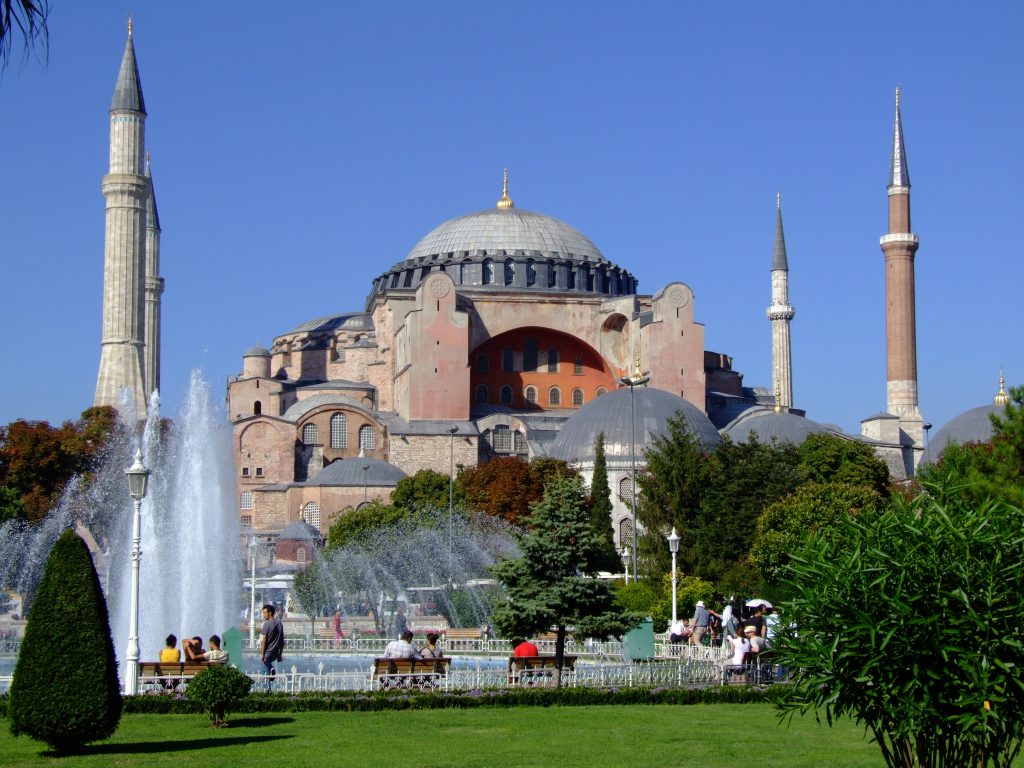
Officially called the Holy Hagia Sophia Grand Mosque, this unique mosque was originally the Church of Hagia Sophia and was designed by Anthemius of Tralles and Isidore of Miletus, two Greek geometers, in 537. 

It was once the biggest Christian church within the Eastern Roman Empire. It was later converted to a mosque in 1453 once the Ottoman Empire took control of the city. Then, in 1935 it was converted into a museum by the Turkish Republic.

Hagia Sophia was converted back into a mosque in 2020 where services are regularly held. Visitors are still welcome to explore the mosque but are asked to be respectful of worshippers and to only visit at certain times. 

Topkapi Palace Museum

Construction of this museum began in 1460 and was completed in 1478. Fatih Sultan Mehmet requested the palace to be built. Topkapi Palace Museum opened as a museum in 1924 and is a great place to spend an afternoon. 

The Topkapi Palace is located in one of the oldest historical regions of the city on the Istanbul Peninsula. The entire palace was not all built at the same time, instead, certain wings and towers were added later during the 19th century. 

It was originally the administration, art, and education center for the Turkish empire for around 400 years. Wander through the museum and learn more about the sultans that ruled from Fatih Sultan Mehmet to Sultan Abdulmecid. 

The Blue Mosque

Construction on The Blue Mosque began in 1609, opened in 1616, and was designed by architect Sedefkar Mehmed Agha. In Turkish, it is called Sultanahmet Camii and is best known for the blue tiles on the interior walls. 

Inside the mosque is the Tomb of Sultan Ahmed I, who ruled as sultan when the mosque was completed. The Blue Mosque also has a madrasa which was where orphans and poorer children were given training and education.

The Blue Mosque is still an active mosque, therefore, it is closed to non-worshippers during the five daily prayers. Visitors are asked to exit the mosque prior to the beginning of each prayer time.

Basilica Cistern

When you are searching out historical landmarks in Istanbul, the Basilica Cistern should be on the list. There are hundreds of cisterns underneath Istanbul, the Basilica Cistern is one of the biggest cisterns that is beneath the city.

In Turkish, the Basilica Cistern is called Yerebatan Sarnici which means Subterranean Cistern, or Yerebatan Saray meaning Subterranean Palace. Located just less than 500 feet from the Hagia Sophia, you can see both in the same afternoon.

The Basilica Cistern was built during the 6th century during the rule of Emperor Justinian I as one of the main water sources for the city. Today, the cistern is kept drained low so the public can go down below and see the inside. 

Grand Bazaar

When you are in Istanbul checking out the top historical landmarks, you have to stop by the Grand Bazaar, one of the oldest and biggest covered markets in the entire world. There are over 4,000 shops in the bazaar spread out over 61 covered streets. 

The Grand Bazaar started as a small market in 1455 and grew into a larger covered market and officially opened in 1461. There are between 250,000 and 400,000 daily visitors and was listed as the most visited tourist attraction in the world. 

Many people consider this bazaar to be the first shopping mall in the world. You can find several amazing gifts and souvenirs when you explore the Grand Bazaar. Grab a cup of coffee and spend the morning checking out the amazing shops. 

Galata Tower

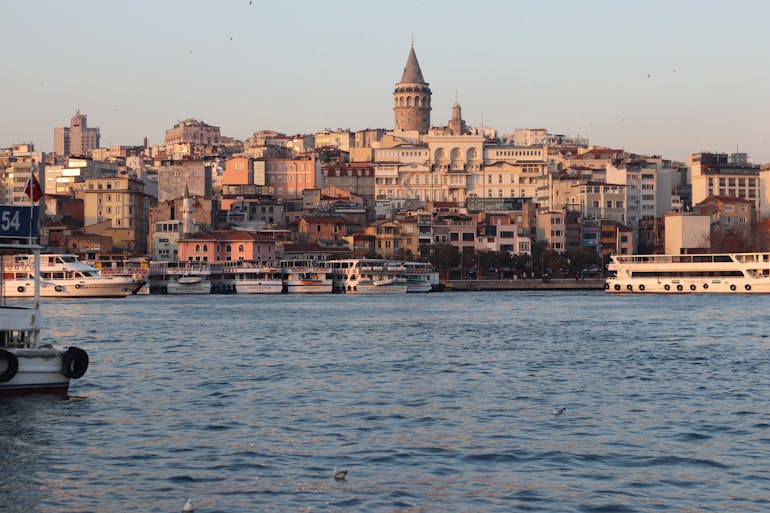
This 205-foot tower was designed by architect Köksal Anadol and has nine floors to explore. The Galata Tower opened in 1348 and is one of the most iconic historical landmarks in Istanbul.

Originally built to be part of the Galata walls by the Genoese, the Galata Tower has been used as a fire watchtower and a dungeon. The tower eventually fell into disrepair and had been repaired several times during the Ottoman period. 

In the 1960s the Istanbul Municipality restored the tower and opened it for visitors, complete with a cafeteria and museum. You can climb to the top floor of the tower to look out over the city for great views and photo ops. 

Kariye Mosque

One of the newer mosques in Istanbul, the Kariye Mosque was built in the Byzantine architectural style. Originally, the mosque was the Church of the Holy Saviour in Chora, a medieval Greek Orthodox church.

Located in the Edirnekapi neighborhood of the Fatih district, the Christian church was converted to a mosque during the 16th century. In 1945, the Kariye Mosque was turned into a museum but President Erdogan converted it back to a mosque in 2020. 

The mosque is not active, but worshippers are welcome to come during the five prayer times. The interior of the mosque has some of the finest and oldest surviving mosaics and frescoes from the Byzantine Christian church

Istanbul is a unique city filled with historical landmarks that pay homage to its very storied past. Locals get to experience these amazing landmarks on a daily basis but if you are only in the city for a few days you will want to pick the most important ones.

Plan your itinerary and soak up the history of this wonderful city. We know the place and our official multilingual guides will take you past and through several of the historic landmarks.

Resources:

https://ayasofyacamii.gov.tr
https://www.millisaraylar.gov.tr/saraylar/topkapi-sarayi

http://www.bluemosque.co/

http://yerebatansarnici.com/ 

https://www.kapalicarsi.com.tr
https://muze.gov.tr/muze-detay?sectionId=GLT04&distId=MRK
https://www.diyanet.gov.tr/tr-TR

Asia Minor Cappadocia

Asia Minor Cappadocia tour gives you a complete view of the most important sites in Turkey.
You will visit Canakkale, Troy and Pergamum and then Kusadasi and the nearby ancient Ephesus, one of the biggest  and best preserved ancient cities and probably the most important archaeological place of  Turkey.
We will continue to Pamukkale with the thermal spring water formations and then to the extraordinary and fascinating Cappadocia.

THURSDAY: ISTANBUL: Upon arrival, you will be met and transferred to your hotel. Balance of day at leisure.


FRIDAY: ISTANBUL: After breakfast full day visit to Istanbul. We begin our tour from Istanbul_Turkey_Hagia_Sophiathe Sultanahmet district, the heart of old Istanbul at Agia Sophia. Built by Emperor Justinian in the 6th century AD this church is one of the marvels of world architecture. Its massive dome dominates the skyline of old Istanbul. It is famed for its mosaics, including glittering portraits of emperors and empresses.
Next we visit the Blue Mosque, which owes its name to the exquisite tiles adorning its interior. Dating from the 17th century, it is the only imperial Mosque with six minarets. The Hippodrome, the stadium of ancient Byzantium, held 100.000 spectators and featured objects from all corners of the empire.
The Grand Bazaar was the commercial heart of the old city and its 4.000 shops are full of treasures – including carpets and kilims, silks, jewelry, ceramics, icons and leather goods.
Lunch in a local restaurant and continuation of our tour. Our afternoon will begin at Topkapi Palace which, from the 15th to 19th century, was the principle residence of the Ottoman Sultans
Little Agia Sophia Mosque is known as one of the oldest standing churches in Istanbul dating back to 6th century. It is early domed-basilica architectural plan of famous Agia Sophia which was applied here first time in the history.


Canakkale_Turkey_Street_MarketSATURDAY: ISTANBUL-CANAKKALE: Afternoon departure to Canakkale, located in the Straits of the Dardanelles  where The site of the Battle of the Dardanelles on the peninsula Gallipoli in 1915 during the First World War took place. Arrival to Canakkale for dinner and overnight at the hotel.


SUNDAY: CANAKKALE – KUSADASI: Departure to Troy, just his name evokes a Kusadasi_Turkey_Kervansarayseries character and adventurous places, heroes and destruction of the mystical city. Visit their ruins and famous reconstructed timber “Horse”. Continue to Pergamum  to visit the rival city of Alexandria in the domain of arts and letters and to which we owe the invention of parchment. Visit the sanctuary dedicated to Asclepius, god of medicine. We head  to Kusadasi known as “Bird Island”. Dinner and overnight.


Ephesus-Turkey-The-House-Of-Vergin-MaryMONDAY: KUSADASI – PAMUKKALE: Departure to Ephesus, one of the biggest and best-preserved ancient cities and probably the most important archaeological place of  Turkey. The tour includes the Superior Agora, the unique ruins of the Odeon, the street towards the port, the Temple of Hadrian, the Library of Celsus and the famous Teatro. Then visit the house of the Virgin Mary, rather Highlights of pilgrimage. Departure to Pamukkale, or “cotton castle”, small emanating area famous for its white pools petrified and formed by lime contained in thermal spring water. Arrival and visit Hierapolis, an old seaside resort that was built on top of the pool with a beautiful theatre and great necropolis. Dinner and overnight.


TUESDAY: PAMUKKALE – CAPPADOCIA: Morning departure to Konya, located in Pamukkale_Turkey_Hot_Springs_Lakesthe heart Anatolian steppe. Arrive in Konya and visit the mausoleum of Mevlana and the museum of Celaleddin Rumi (1207-1273), founder of the sect of the mystical whirling dervishes. Later departure to the region of Cappadocia, where indescribable harmony in a kaleidoscope of colours, makes the red and brown tones: grey, green and yellow. Dinner and overnight.


Cappadocia_Turkey_Hot_Air_BallonWEDNESDAY: CAPPADOCIA: Departure for a full-day tour of the extraordinary and fascinating Cappadocia starting with a visit to the underground city Kaymakli or Ozkonak, originally excavated by Christian communities, with a depth of 7 to 12 stories underground. Then we will go to Valley Güvercinlik (Pigeon Valley) and admire a panoramic view of the castle of Uchisar on top of a mound of volcanic rock crossed by tunnels and windows. In the afternoon, visit the open-air museum of Göreme, a World Heritage Site by UNESCO. Continued, visiting the vineyard where Pasabag is so-called “fairy chimneys”. Dinner and accommodation.


THURSDAY: CAPPADOCIA – ISTANBUL: Early morning transfer to the airport of Istanbul_Turkey_Bosporus_HousesKayseri (90 kms) to take the flight to Istanbul. Arrival and transfer to the hotel. The rest of the day in Istanbul to know better the city, visit some famous museums, do some shopping, make some bargains in the famous Bazaars and taste the Turkish cuisine in the restaurants of the city.


SUNDAY: ISTANBUL – AIRPORT: According to your departure flight, you will be transferred to the airport.

Get more details and Book this vacation now

Cairo_Egypt_All_Gizah_Pyramids
Istanbul Cappadocia Cairo

A perfect combination of Istanbul Cappadocia Cairo. Admire the famous Istanbul monuments, the Museum of Anatolian Civilizations and the Mausoleum of Kemal Ataturk in Ankara and the famous Cappadocia area and then Cairo and the Pyramids of Egypt.

DAY 1: ISTANBUL: Arrival in Istanbul, welcome & assistance at the airport and transfer to hotel. Free day.


DAY 2: ISTANBUL After breakfast full day visit to Istanbul. We begin our tour from Istanbul_Turkey_Hagia_Sophiathe Sultanahmet district, the heart of old Istanbul at Agia Sophia. Built by Emperor Justinian in the 6th century AD this church is one of the marvels of world architecture. Its massive dome dominates the skyline of old Istanbul. It is famed for its mosaics, including glittering portraits of emperors and empresses (closed on Mondays).
Next we visit the Blue Mosque, which owes its name to the exquisite tiles adorning its interior. Dating from the 17th century, it is the only imperial Mosque with six minarets. The Hippodrome, the stadium of ancient Byzantium, held 100.000 spectators and featured objects from all corners of the empire. The Grand Bazaar was the commercial heart of the old city and its 4.000 shops are full of treasures – including carpets and kilims, silks, jewelry, ceramics, icons and leather goods (Closed on Sundays).
Lunch in a local restaurant and continuation of our tour. Our afternoon will begin at Topkapi Palace which, from the 15th to 19th century, was the principle residence of the Ottoman Sultans (closed on Tuesdays).
Little Agia Sophia Mosque is known as one of the oldest standing churches in Istanbul dating back to 6th century. It is early domed-basilica architectural plan of famous Agia Sophia which was applied here first time in the history.


Ankara_Turkey_Opera_HouseDAY 3: ISTANBUL – ANKARA – CAPPADOCIA: In the morning, transfer to airport for flight to Ankara. Arrival in Ankara & then to the city to visit the Museum of Anatolian Civilizations and the Mausoleum of Kemal Ataturk. Lunch and continue to Cappadocia. Dinner and overnight.


DAY 4: CAPPADOCIA: Visit the spectacular Cappadocia region, unique for its Cappadocia_Turkey_Hot_Air_Ballonfascinating and unique landscape formed by the lava thrown out by volcanoes Erciyes and Hasan, 3 million years ago. Visit the many monasteries and chapels in Goreme, World Heritage Site by UNESCO, dug into the rocks and decorated with frescoes of the tenth century (some of them very well preserved). Pass by and admire a panoramic view of the castle of Uchisar on top of a mound of volcanic rock crossed by tunnels and windows and Avcilar Valley. Lunch and in the afternoon, visit the village of Avanos, famous for its handicrafts and valleys and G?vercinlik Valley (Pigeon Valley). Visit the underground city of Kaymakli or Serhatli, one of 36 underground cities of Cappadocia served as a refuge for Christians. Return to hotel and dinner.


DAY 5: CAPPADOCIA KAYSERI – ISTANBUL: After breakfast departure to Kayseri airport for return flight to Istanbul. Arrival & transfer to hotel.


DAY 6: ISTANBUL – CAIRO: At the time indicated, will be transferred to airport for flight to Cairo. Arrival, welcome & assistance at the airport and transfer to hotel. Free day.


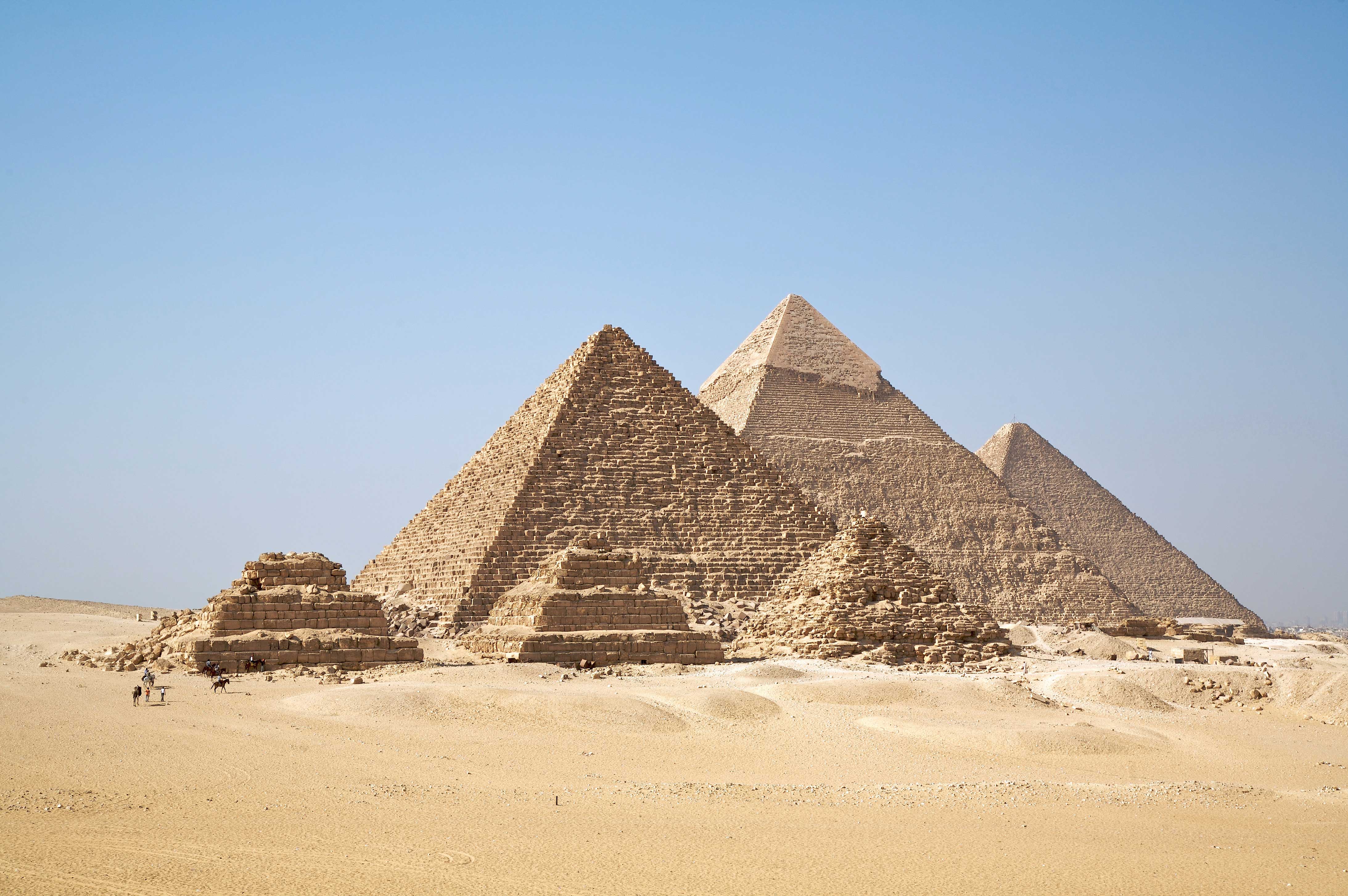
Cairo_Egypt_Cairo_MuseumDAY 7: CAIRO: Full day tour starting at the Museum of Antiquities in Cairo and the Bazaar with free time for shopping. After lunch following the tour to Giza where you will find the three Pyramids of Cheops, Khafre and Menkaure, the Sphinx and the Valley Temple.


DAY 8: CAIRO – MEMPHIS – SAKKARA: Half day visit to Memphis the first capital Cairo_Egypt_The_Great_Sphinx_of_Gizaof ancient Egypt with the famous statue of Ramses II. Rather then to Sakkara necropolis of Memphis where you will see the Step Pyramid.


Cairo_Egypt_Cairo_UniversityDAY 9: CAIRO:  Morning at leisure in Cairo for personal activities, shopping or participating in an optional tour. For the evening dinner on board a ship on the Nile (small night cruise ) with traditional entertainment and transfers.


DAY 10:  CAIRO – AIRPORT: At the indicated time  you will be transferred to the airport for your departure flight.

Get more details and Book this vacation now

Versión española de este paquete

Delphi_Greece_Tholos_Athina_ProneaBalanced combination of Greece Turkey vacation.
Visit Athens with all the ancient monuments like the legendary Acropolis and the new Acropolis Museum.
Visit the nearby Islands of Aegina, Poros and Hydra and get a taste of all the Greek Island. Visit the Oracle in a full day tour to Delphi.
Visit Istanbul and all of its famous monuments in one full day tour to all the famous monuments.
Visiting the two continents and cruising the Bosporus  you have a full vision of the Istanbul greater area.

DAY 1: ATHENS: Upon arrival, you will be met and transferred to your hotel. Balance of day at leisure.


DAY 2: ATHENS:Morning sightseeing tour of Athens including all famous monuments: Acropolis Museum Athens GreeceHouse of Parliament, Tomb of the Unknown Soldier, Adrian’s Arch, Temple of the Olympian Zeus, the Royal Palace, the Academy, the University and the National Library. Tour will end by visiting the Acropolis and the new Acropolis Museum, “State of the art” in museum construction and very rich in content. On Mondays the new Acropolis Museum is closed.
Afternoon free to visit Plaka (The old Athens city) with lots of souvenir shops, restaurants and taverns.


Hydra Island GreeceDAY 3: ATHENS – AEGINA – POROS – HYDRA: This small cruise will take you to Hydra, Poros and Aegina and bring you back in the evening full of fun and with the taste of the Greek islands.
Morning transfer to the pier of Piraeus, to embark your cruise ship for your full day cruise to the islands of Aegina, Poros and Hydra. Good opportunity to know a little bit of Greek Islands and visit a small part of Ancient Greece in the optional tour to the temple of Aphea Athina in Aegina.
On the return trip you enjoy a program with Greek music and songs and join the dancers on Greek folklore dancing. Included is the transfers to and from the port, port taxes and lunch on board.


DAY 4: ATHENS – DELPHI: Full day excursion to the Archaeological site of Delphi, Delphi_Greece_The_Museum_Kourionce known as the centre of Earth. This tour will show you the ruins of ancient Delphi and also a big part of mainland Greece full of green places and beautiful villages. Ancient Greece was full of religious places like Delphi, also connected with athletics and medical services. Delphi was the centre of Ancient World – the “Omphalos” (Navel of Earth) – whose prestige extended far beyond the boundaries of the Hellenic World.
On the slopes of Mount Parnassus, in a landscape of unparalleled beauty and majesty, lie the ruins of the Sanctuary of Apollo Pythios.
Visit the Treasury of the Athenians, the Temple of Apollo and the Museum containing such masterpieces of Ancient Greek sculpture as the bronze Charioteer and the famous athlete Aghias.
You will have your lunch in a local restaurant and will return to Athens in the evening


DAY 5: ATHENS – ISTANBUL: According to depar-ture flight transfer to Athens airport for the flight to Istanbul . Arrival in Istanbul and transfer to your selected hotel in Istanbul. Balance of the day at leisure.


DAY 6: ISTANBUL: After breakfast full day visit to Istanbul. We begin our tour from the Istanbul_Turkey_Hagia_SophiaSultanahmet district, the heart of old Istanbul at Agia Sophia. Built by Emperor Justinian in the 6th century AD this church is one of the marvels of world architecture. Its massive dome dominates the skyline of old Istanbul. It is famed for its mosaics, including glittering portraits of emperors and empresses.
Next we visit the Blue Mosque, which owes its name to the exquisite tiles adorning its interior. Dating from the 17th century, it is the only imperial Mosque with six minarets. The Hippodrome, the stadium of ancient Byzantium, held 100.000 spectators and featured objects from all corners of the empire.
The Grand Bazaar was the commercial heart of the old city and its 4.000 shops are full of treasures – including carpets and kilims, silks, jewelry, ceramics, icons and leather goods. Lunch in a local restaurant and continuation of our tour. Our afternoon will begin at Topkapi Palace which, from the 15th to 19th century, was the principle residence of the Ottoman Sultans.
Little Agia Sophia Mosque is known as one of the oldest standing churches in Istanbul dating back to 6th century. It is early domed-basilica architectural plan of famous Agia Sophia which was applied here first time in the history.


Istanbul_Turkey_Bosporus_HousesDAY 7: ISTANBUL – BOSPORUS: Half day cruise through Bosporus, the majestic strait that runs through Istanbul, linking Europe and Asia. From our cruise boat, we view the dramatic sights lining the Bosphorus’ wooded shores: mosques, a bridge that for a time was the world’s longest and Rumeli Hisari, a massive fortress built by Mehmet the Conqueror in just three months as he prepared to take Istanbul. Also noteworthy on this tour are the 19th century mansions of the Ottoman elite and the Sultans’ fanciful gingerbread palaces and hunting lodges Disembarkation at the European part of Turkey and transfer to your hotel.


DAY 8: ISTANBUL – TWO CONTINENTS: Early departure for the intercontinental   Istanbul_Turkey_Sultan_Mehmet_Bridgebridge of Bosporus, to continue to the Camlica hill at the Asiatic part of Turkey which affords panoramic views of Istanbul, Marmara Sea, Princes’ Islands and magnificent Istanbul. Then visit the Beylerbeyi Palace on the shore of the Bosphorus, one of the most elegant of the late Ottoman palaces and boasts six sumptuously furnished reception halls. and a typical fish village along the coast of Bosporus with time at leisure for shopping.


DAY 9: ISTANBUL – AIRPORT: According to your departure flight, you will be transferred to the airport.

Get more details and Book this vacation now

Versión española de este paquete

Antaly Beach Turkey

If you are the beach lover the most beautiful beaches can offer you Turkey. It has few wonderful beaches that can be placed on the list of the most beautiful beaches in the world. If you choose one of the beaches in Turkey, you can play sports, enjoy and sunbath at the Aegean, Mediterranean and Black sea. In the cities at the coast you can find rich history, natural beauties and tasty traditional kitchen. Here are the most beautiful beaches because mentioning just one of them wouldn’t be enough. All you have to do is to get Turkey visa and to choose the right spot for you and start your vacation.

Oludeniz (blue lagoon)

Although Oludeniz is one of the most popular beaches in Turkey, because of its simple Oludeniz_on_the_Turquoise_Coast_Turkeyshape regulating of the crowd doesn’t represent any problem.- This peninsula is placed on the south eastern end of the Aegean sea.- Warm and shallow water, great restaurants and refined sand are more than enough for enjoying.- Average temperature is not high even during the warmest months of the summer.- It has beautiful panorama because it’s surrounded with mountains.- Oludeniz has the official blue flag, that means that satisfies environmental standards.

Alanya

Alanya_Panorama_Turkey  It is placed on the south coast of the Mediterranean sea.- In the first place Alanya was the secret of the local population, but now is the one of the most popular Mediterranean beaches.- Stone beaches are very warm during the warmest moths of the summer, but if you swim in the deep cold water of the Mediterranean sea, that is the great way to cool yourself while you are getting the bronze tan.- Alanya is the multicultural place where live people from all around the Europe and which visit people from all around the world, so it is a great place for meeting other cultures.- Alanya is on the ideal place, because near are Antalya, Cappadocia and Anatolya, that makes Alanya one of the best choices for vacation.- Alanya has the similar climate as Olideniz.

Antalya

Antalya is one of the most popular Turkish cities and a lot of people choose to spend Antalya_Beach_Turkeytheir vacation exactly at this beach.- Beaches are here from pebble instead of the sand, that is usual for the beaches of the Mediterranean sea.- The most popular from all beaches is Cleopatra’s beach. – Old part of Antalya is placed at the crossroad of the hotels, beaches and other complexes. It is named Kaleici.- You can also visit isolated and hidden beaches where you can get just by the boat.- Water is clear and beautiful and you can paddle and dive or you can sunbath at the abandoned beaches.

Bodrum

Bodrum_Turkey  It is called Turkish Saint Tropez. – In Bodrum are probably most visited and the most  popular beaches. – It is estimated that population in Bodrum raise four times during the summer.- Bodrum is place where come movie stars and its popular tour destination of the ship The Blue Voyage. – Water around Bodrum is shallow and warm under which you can find little colourful stones. – Bodrum beaches offer also you the great night life.

For more information and for making your holiday an unforgetable one click here